Still Democracy’s Death Watch
Saving democracy does not resonate when the forces of reaction are gearing up for the next offensive.
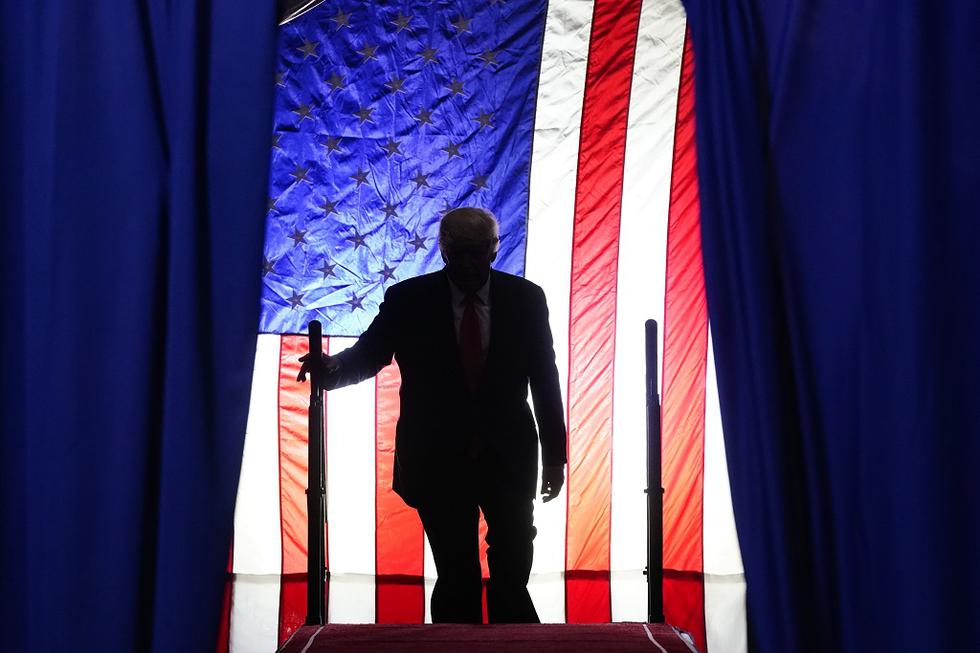
To understand why nothing has changed in America after the midterm elections of 2022, fire up the wayback machine and decamp to the weeks after voters sent Barack Obama to the White House. Elevate one Black man to the presidency and America declares racism dead and white supremacy so much ancient history.
Obama was Martin Luther King’s dream made real: Mississippi would be transformed into “an oasis of freedom and justice,†Black and white children in Alabama would “join hands as sisters and brothers,†and the sons of former slaves and slave owners in Georgia would commune “at the table of brotherhood.†But many Black folk rejoiced for a minute and then returned to the collective business of being Black in America. It took longer for the Black president and kindred spirits to wake up from the reverie of a post-racial America to realize that racism was not only not dead, it was healthy and thriving.
The heirs to the great white supremacist project had no interest in setting foot in wherever a post-racial America is, or working with a Black man who had somehow managed to navigate the series of evasive maneuvers known as elections. The counterreaction to the 44th president set in almost immediately. Republican shape-shifters threw off the pretenses of the so-called compassionate conservatism that animated George W. Bush for more aggressive stances. All that remained after Obama departed was for the once and current presidential candidate Donald Trump to take the bitterness that had surfaced and sculpt it into a sinister but not unfamiliar force, at least to African Americans.
The 2008 election did not open the portals to a post-racial America, nor will Democrats’ current midterm gains save democracy. This delusion is still in its early days, but the all-too-American propensity for exquisite self-deception is already evident. Somehow, the most successful showing by the president’s party in 20 years is a bulwark against authoritarianism. But that conclusion ignores the salient fact that the forces of “interposition and nullification†that King ascribed to Alabama Gov. George Wallace in 1963 are ascendant after three decades of single-minded pursuit of reactionary goals like eviscerating reproductive rights.
“None of the narratives that we read in white commercial media reflect what happened on Tuesday,†Greg Carr, a Howard University associate professor of Afro-American studies, told a national town hall forum on the midterms’ impact on Black America and the Pan-African world last week. “What happened on Tuesday is we bought some time and if we can seize the moment, there is some opportunity here to reimagine our relationship with this state polity we call the United States of America.†He held out statehouse victories (in places like Pennsylvania and Michigan) as “firewalls†protecting Democratic Party gains in 2024. But he warned that the clock is ticking. “We’ve got now 24 months, not even,†he said.
Indeed, the saving democracy project, like the beta version of the post-racial America project, is withering on the vine in real time. The average American voter is collateral damage in the disinformation war that forces people to plow through relentlessly partisan news programming, misleading voter information materials, doctored photos, fake news sites, Russian bots, political ads, and more. Nor is any of that offset by the Fourth Estate’s cancerous preoccupation with horse-race journalism that has reduced elections to poll-dissecting contests that, as the midterms made plain, trivialize voters’ concerns about complex, interrelated factors and transform them into simplistic rankings devoid of nuance.
The 2008 election did not open the portals to a post-racial America, nor will Democrats’ current midterm gains save democracy.
Behind the insistence on an inflation/economy narrative as the issue preoccupying voters was a shaky construct, namely that the average voter is unable to hold multiple concepts like abortion, inflation, and threats to democracy in adjacent brain cells in order to engage in decision-making about their local, state, and national officeholders. At the town hall, Julianne Malveaux, dean of the College of Ethnic Studies at California State University, Los Angeles, asked and answered this question: “Do they care about abortion or inflation? I would posit that Black women can care about both things at the same time.â€
November 8 did not erase voter suppression. It remains to be seen how Georgia’s voter suppression laws (one provision, a prohibition on providing water and snacks to voters waiting in line, evoked widespread derision) will be brought to bear on the Sen. Raphael Warnock/Herschel Walker run-off contest. Warnock has already filed suit to force election officials to allow Saturday voting (otherwise, due to a twisted law involving the day after Thanksgiving and a Confederate general that only a Southern legislature could perfect, this runoff will have no weekend voting days).
