| The lesson of this election is that Democrats must attack inequality – and not cede working-class voters to Trump |
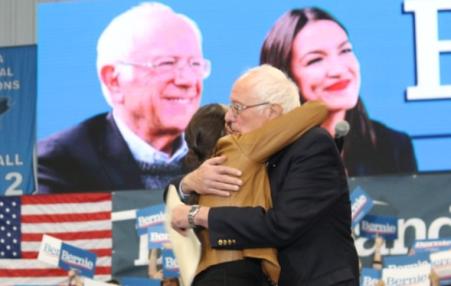 "IMG_4023", by cornstalker (CC BY 2.0) |
A political disaster such as what occurred last Tuesday gains significance not simply by virtue of who won or lost, but through how the election is interpreted. This is known as the Lesson of the election. The Lesson explains what happened and why. It deciphers the public’s mood, values, and thoughts. It attributes credit and blame. And therein lies its power. When the Lesson of the election becomes accepted wisdom – when most of the politicians, pundits and journalists come to believe it – it shapes the future. It determines how parties, candidates, political operatives and journalists approach coming elections. What’s the Lesson of the 2024 election? According to exit polls, Americans voted mainly on the economy – and their votes reflected their class and level of education. While the US economy has improved over the last two years according to standard economic measures, most Americans without college degrees – that’s the majority – have not felt it. In fact, most Americans without college degrees have not felt much economic improvement for four decades, and their jobs have grown less secure. The real median wage of the bottom 90% is stuck nearly where it was in the early 1990s, even though the economy is more than twice as large now as it was then. Most of the economy’s gains have gone to the top. This has caused many Americans to feel frustrated and angry. Trump gave voice to that anger. Harris did not. The real lesson of the 2024 election is that Democrats must not just give voice to the anger, but also explain how record inequality has corrupted our system, and pledge to limit the political power of big corporations and the super-rich. The basic bargain in America used to be that if you worked hard and played by the rules, you’d do better, and your children would do even better than you. But since 1980, that bargain has become a sham. The middle class has shrunk. Why? While Republicans steadily cut taxes on the wealthy, Democrats abandoned the working class. Democrats embraced Nafta and lowered tariffs on Chinese goods. They deregulated finance and allowed Wall Street to become a high-stakes gambling casino. They let big corporations gain enough market power to keep prices (and profit margins) high. They let corporations bust unions (with negligible penalties) and slash payrolls. They bailed out Wall Street when its gambling addiction threatened to blow up the entire economy but never bailed out homeowners who lost everything. They welcomed big money into their campaigns, and delivered quid pro quos that rigged the market in favor of big corporations and the wealthy. Joe Biden redirected the Democratic party back toward its working-class roots, but many of the changes he catalyzed – more vigorous actions against monopolies, stronger enforcement of labor laws and major investments in manufacturing, infrastructure, semiconductors and non-fossil fuels – wouldn’t be evident for years. In any event, he could not communicate effectively about them. The Republican party says it’s on the side of working people, but its policies will hurt ordinary workers even more. Trump’s tariffs will drive up prices. His expected retreat from vigorous anti-monopoly enforcement will allow giant corporations to drive up prices further. If Republicans gain control over the House as well as the Senate, as looks likely, they will extend Trump’s 2017 tax law and add additional tax cuts. As in 2017, these lower taxes will benefit mainly the wealthy and enlarge the national debt, which will give Republicans an excuse to cut Social Security, Medicare and Medicaid – their objective for decades. Democrats must no longer do the bidding of big corporations and the wealthy. They must instead focus on winning back the working class. They should demand paid family leave, Medicare for all, free public higher education, stronger unions, higher taxes on great wealth, and housing credits that will generate the biggest boom in residential home construction since the second world war. They should also demand that corporations share their profits with their workers. They should call for limits on CEO pay, eliminate all stock buybacks (as was the SEC rule before 1982) and reject corporate welfare (subsidies and tax credit to companies and industries unrelated to the common good). Democrats need to tell Americans why their pay has been lousy for decades and their jobs less secure: not because of immigrants, liberals, people of color, the “deep state”, or any other Trump Republican bogeyman, but because of the power of large corporations and the rich to rig the market and siphon off most of the economy’s gains. In doing this, Democrats should not retreat from their concerns about democracy. Democracy goes together with a fair economy. Only by reducing the power of big money in our politics can America grow the middle class, reward hard work and reaffirm the basic bargain at the heart of our system. If the Trump Republicans gain control of the House, they will have complete control of the federal government. That means they will own whatever happens to the economy and will be responsible for whatever happens to America. Notwithstanding all their anti-establishment populist rhetoric, they will become the establishment. The Democratic party should use this inflection point to shift ground – from being the party of well-off college graduates, big corporations, “never-Tumpers” like Dick Cheney and vacuous “centrism” – to an anti-establishment party ready to shake up the system on behalf of the vast majority of Americans. This is and should be the Lesson of the 2024 election. Robert Reich, a former US secretary of labor, is a professor of public policy at the University of California, Berkeley, and the author of Saving Capitalism: For the Many, Not the Few and The Common Good. His newest book, The System: Who Rigged It, How We Fix It, is out now. He is a Guardian US columnist. His newsletter is at robertreich.substack.com. The Guardian is globally renowned for its coverage of politics, the environment, science, social justice, sport and culture. Scroll less and understand more about the subjects you care about with the Guardian's brilliant email newsletters, free to your inbox. |
