Showing posts with label Democrats. Show all posts

Saturday, November 16, 2024

The Lessons of the 2024 Election; Robert Reich

The lesson of this election is that Democrats must attack inequality – and not cede working-class voters to Trump

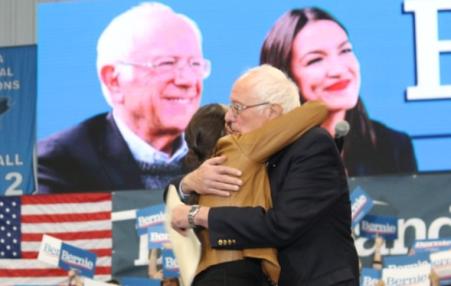
"IMG_4023", by cornstalker (CC BY 2.0)


A political disaster such as what occurred last Tuesday gains significance not simply by virtue of who won or lost, but through how the election is interpreted.

This is known as the Lesson of the election.

The Lesson explains what happened and why. It deciphers the public’s mood, values, and thoughts. It attributes credit and blame.

And therein lies its power. When the Lesson of the election becomes accepted wisdom – when most of the politicians, pundits and journalists come to believe it – it shapes the future. It determines how parties, candidates, political operatives and journalists approach coming elections.

What’s the Lesson of the 2024 election?

According to exit polls, Americans voted mainly on the economy – and their votes reflected their class and level of education.

While the US economy has improved over the last two years according to standard economic measures, most Americans without college degrees – that’s the majority – have not felt it.

In fact, most Americans without college degrees have not felt much economic improvement for four decades, and their jobs have grown less secure.

The real median wage of the bottom 90% is stuck nearly where it was in the early 1990s, even though the economy is more than twice as large now as it was then.

Most of the economy’s gains have gone to the top.

This has caused many Americans to feel frustrated and angry. Trump gave voice to that anger. Harris did not.

The real lesson of the 2024 election is that Democrats must not just give voice to the anger, but also explain how record inequality has corrupted our system, and pledge to limit the political power of big corporations and the super-rich.

The basic bargain in America used to be that if you worked hard and played by the rules, you’d do better, and your children would do even better than you.

But since 1980, that bargain has become a sham. The middle class has shrunk.

Why? While Republicans steadily cut taxes on the wealthy, Democrats abandoned the working class.

Democrats embraced Nafta and lowered tariffs on Chinese goods. They deregulated finance and allowed Wall Street to become a high-stakes gambling casino. They let big corporations gain enough market power to keep prices (and profit margins) high.

They let corporations bust unions (with negligible penalties) and slash payrolls. They bailed out Wall Street when its gambling addiction threatened to blow up the entire economy but never bailed out homeowners who lost everything.

They welcomed big money into their campaigns, and delivered quid pro quos that rigged the market in favor of big corporations and the wealthy.

Joe Biden redirected the Democratic party back toward its working-class roots, but many of the changes he catalyzed – more vigorous actions against monopolies, stronger enforcement of labor laws and major investments in manufacturing, infrastructure, semiconductors and non-fossil fuels – wouldn’t be evident for years. In any event, he could not communicate effectively about them.

The Republican party says it’s on the side of working people, but its policies will hurt ordinary workers even more. Trump’s tariffs will drive up prices. His expected retreat from vigorous anti-monopoly enforcement will allow giant corporations to drive up prices further.

If Republicans gain control over the House as well as the Senate, as looks likely, they will extend Trump’s 2017 tax law and add additional tax cuts.

As in 2017, these lower taxes will benefit mainly the wealthy and enlarge the national debt, which will give Republicans an excuse to cut Social Security, Medicare and Medicaid – their objective for decades.

Democrats must no longer do the bidding of big corporations and the wealthy. They must instead focus on winning back the working class.

They should demand paid family leave, Medicare for all, free public higher education, stronger unions, higher taxes on great wealth, and housing credits that will generate the biggest boom in residential home construction since the second world war.

They should also demand that corporations share their profits with their workers. They should call for limits on CEO pay, eliminate all stock buybacks (as was the SEC rule before 1982) and reject corporate welfare (subsidies and tax credit to companies and industries unrelated to the common good).

Democrats need to tell Americans why their pay has been lousy for decades and their jobs less secure: not because of immigrants, liberals, people of color, the “deep state”, or any other Trump Republican bogeyman, but because of the power of large corporations and the rich to rig the market and siphon off most of the economy’s gains.

In doing this, Democrats should not retreat from their concerns about democracy. Democracy goes together with a fair economy.

Only by reducing the power of big money in our politics can America grow the middle class, reward hard work and reaffirm the basic bargain at the heart of our system.

If the Trump Republicans gain control of the House, they will have complete control of the federal government. That means they will own whatever happens to the economy and will be responsible for whatever happens to America.

Notwithstanding all their anti-establishment populist rhetoric, they will become the establishment.

The Democratic party should use this inflection point to shift ground – from being the party of well-off college graduates, big corporations, “never-Tumpers” like Dick Cheney and vacuous “centrism” – to an anti-establishment party ready to shake up the system on behalf of the vast majority of Americans.

This is and should be the Lesson of the 2024 election.

Robert Reich, a former US secretary of labor, is a professor of public policy at the University of California, Berkeley, and the author of Saving Capitalism: For the Many, Not the Few and The Common Good. His newest book, The System: Who Rigged It, How We Fix It, is out now. He is a Guardian US columnist. His newsletter is at robertreich.substack.com.

The Guardian is globally renowned for its coverage of politics, the environment, science, social justice, sport and culture. Scroll less and understand more about the subjects you care about with the Guardian's brilliant email newsletters, free to your inbox.


Tuesday, March 19, 2024

How Actually Existing Democrats Run for Office

How Actually Existing Democrats Run for Office: A new survey of 2022 candidates shows that economic populism helped.

How Democrats become falsely accused of being Left, woke, and advocating the "cultural" left.
It is not about neoliberalism. 


Wednesday, July 5, 2023

Biden, Democrats

 Robert Reich


The best way for Biden and the Democrats to counteract Trump’s “strength or weakness” is by taking aim at the real bullies of America — the C-suite oligarchs, Wall Street plutocrats, billionaire monopolists who have been riding roughshod over the vast majority of Americans. 

End their big-monied corruption of our democracy. Stop their monopolizing of the economy. Prevent them from using their economic power to raise prices. Call a halt to their firing workers without notice, shipping jobs abroad, and busting unions. 

“Bidenomics” could create hundreds of thousands of good manufacturing jobs. That’s good, but not sufficient. 

The most powerful force in American politics today is anti-establishment fury at a rigged economic system. 

To counter Trump’s fake battle with cultural elites whom he accuses of undermining America’s moral core, Biden should mount a real battle against economic elites who have shafted America’s middle and working classes. 


Saturday, August 20, 2022

Democrats Should Make a Much Bigger Deal of the Threat Posed by Trump


Democrats will suffer in the midterms if they don’t make absolutely clear the possible consequences of the former president’s disdain for democracy and the rule of law.

By John Nichols for The NationJune 19, 5:00 am

Republicans recognize that the fundamental issue of the 2022 midterm elections is whether the United States will continue as a constitutional republic or warp into an authoritarian state where the rule of law and the will of the people are casually disregarded. The question is whether Democrats understand that this is what the election is about, and whether they will fight as hard to defend democratic norms as Republicans are fighting to dismantle them.

The GOP is answering the existential question of the era by signaling that it is prepared to abandon the basic premises of the American experiment in order to move toward an authoritarian governance founded on the cult of defeated former president Donald Trump. To that end, Republicans have refashioned their party as the blunt instrument of Trumpism: rejecting even the most conservative members of Congress who voted to impeach a sitting president for inciting insurrection, blocking a bipartisan inquiry into Trump’s plot to overturn the results of the 2020 presidential election, andpromising to punish Democrats and Republicans who have pursued investigations of last year’s January 6 Capitol attack. The party has prioritized attacking voting rights and election oversight in the statehouses it controls. It has turned to European white nationalist strongmen, such as Hungarian Prime Minister Viktor Orbán, for inspiration. 

The GOP’s singular focus on dismantling democracy and rejecting the rule of law came into stark relief on the morning of August 8, when FBI agents executed a search warrant at Trump’s Mar-a-Lago compound in Florida. An apoplectic Representative Marjorie Taylor Greene (R-Ga.) tweeted“DEFUND THE FBI!” and vowed, “In January, we take on the enemy within.” Instead of a rebuke, Greene’s extremism earned an echo from House minority leader Kevin McCarthy (R-Calif.): “The Department of Justice has reached an intolerable state of weaponized politicization,” he declared. “When Republicans take back the House, we will conduct immediate oversight of this department, follow the facts, and leave no stone unturned.” Leaving no doubt about his desire to intimidate the Department of Justice, McCarthy told Attorney General Merrick Garland to “preserve your documents and clear your calendar.” The Republican who could be the next speaker of the House was proposing nothing less than obstruction of justice in order to defend Trump.

There is no longer any question about where the GOP stands. But where exactly do the Democrats stand?

Thursday, April 21, 2022

November Does Not Have to be a Disaster for Democrats - Elizabeth Warren

 Ms. Warren is a U.S. senator from Massachusetts

Democrats are the party of working people. Ahead of the 2020 election, we advanced ideas and plans that we believed would, in ways big and small, make our democracy and our economy work better for all Americans. Across this country, voters agreed with us — and gave us a majority in Washington so that we could deliver on those promises.

Republican senators and broken institutions have blocked much of that promised progress. Now Republicans are betting that a stalled Biden agenda won’t give Democrats enough to run on in the midterm elections — and they might be right. Despite pandemic relief, infrastructure investments and the historic Supreme Court confirmation of Ketanji Brown Jackson, we promised more — and voters remember those promises.
Republicans want to frame the upcoming elections to be about “wokeness,” cancel culture and the “militant left wing.” Standing up for the inherent dignity of everyone is a core American value, and Democrats are proud to do that every day. While Republican politicians peddle lies, fear and division, we should use every single one of the next 200 days or so before the election to deliver meaningful improvements for working people.
Democrats win elections when we show we understand the painful economic realities facing American families and convince voters we will deliver meaningful change. To put it bluntly: if we fail to use the months remaining before the elections to deliver on more of our agenda, Democrats are headed toward big losses in the midterms.

Time is running short. We need to finalize a budget reconciliation deal, making giant corporations pay their share to fund vital investments in combating climate change and lowering costs for families, which can advance with only 50 Senate votes. Other priorities can be done with the president’s executive authority. It’s no secret that I believe we should abolish the filibuster. But if Republicans want to use it to block policies that Americans broadly support, we should also force them to take those votes in plain view.

Friday, October 15, 2021

Unions Loosing Ground


In Middle America, Unions and Democrats Are Sleepwalking Into the Grave


By not organizing in decimated post-industrial towns, we’re ceding ground to the right wing.


By Hamilton Nolan/In These Times/ October 6, 2021


Where is nothing the Democratic Party loves more than indulging in some existential hand wringing over its declining popularity in the crumbling American heartland. Indeed, this was the favorite pundit pastime of the entire Trump era. Amid the wailing over cultural differences and economic insecurity, a rarely heard word is ​“unions.” Yet, a new report adds to the evidence that the fate of the Democratic Party is intimately tied to the decline of union power. It’s also one more sign that the labor movement itself needs to throw everything it has into new organizing with a fervor that has been lacking in our lifetimes.


The new analysis, by several Democratic consultants, parses election results at a county level to argue that the simple narrative that Democrats win urban areas, Republicans win rural areas, and the suburbs are a battleground, is simplistic and misleading. In fact, the report finds that Democrats’ biggest losses in the 2020 election came in ​“factory town” counties with smaller cities that traditionally relied on manufacturing employment — counties that account for 40% of all voters. Across 10 states in the Midwest and Northeast that comprise the fading heart of America’s former manufacturing hubs, Democrats lost 2.6 million votes between Obama’s election in 2012 and Biden’s in 2020. That is a million more votes than Democrats gained in those states’ cities and suburbs. In other words, across vital battleground states like Ohio, Wisconsin, Pennsylvania and Minnesota, the Democratic Party is most vulnerable in the very places that have been most acutely devastated by the decline of American manufacturing jobs over the past two decades.


But this is not just a typical story of economic hopelessness. It is, more accurately, a story of the decline of the power of organized labor. Because the report finds that more than 90% of the decline in union members that the United States suffered between 2010 and 2020 was focused in nine of the states studied. ​“On average, our nine states lost 10% of their union membership over 10 years — a rate three times greater than the U.S. average,” the report finds. So, within the very swing states that the Democratic Party needs to win to hold onto the White House, the institution of union membership is crumbling faster than anywhere else in the country. 


Trivially, this decline is due to the familiar Republican legal and regulatory and economic attacks on organized labor, like ​“right to work” laws that make it harder to organize and maintain unions. That is true, as far as it goes. But it is not the message that the political class should take away from this. 


For the labor movement, the story here is that as traditionally unionized manufacturing jobs disappeared, unions failed to organize the next set of (worse) jobs that rose up to take their place in these left-behind towns. Global capitalism is a fearsome beast. Reining in the post-NAFTA decimation of the U.S. manufacturing economy is a job that will require institutions bigger than unions. What unions can do, and must do, and have not done, is to focus at all times on the working people themselves. If the factories leave, and people go work at the Dollar General, then unions need to unionize the Dollar General. That has absolutely not been done. Nor has it even been attempted on any reasonable scale. Workers in these devastated areas live in the economy of 2021, and unions are still living in the economy of 1970, in their own minds. It is fine to fight as hard as possible to retain good union jobs. But if you lose them, you still need to organize the people who are left behind. Wake the fuck up and build the next generation of unions in these places. The labor movement is very, very late to this job. 


And for the Democrats, the lesson here is that seeing unions as a simple interest group that exists to provide money and door-knockers to the Democratic Party is a losing proposition. Prior to Biden, the post-Reagan Democratic presidents have mostly assumed that since they weren’t actively persecuting unions like Republicans were, that was enough. Wrong. The Democratic Party has a direct interest in therebuilding of the labor movement. If it is not actively assisting unions (with more than words) in the project of organizing millions and millions of workers who have been left behind in our modern Amazonified capitalist world, it is idiotically fiddling while its base burns. A strong and vibrant and well-functioning union can be the difference between a laid-off factory worker becoming an advocate for a progressive world, or falling into a MAGA pit. 


The union losses in these factory towns have hit hard. These were often unions that have deep roots in the community. They were institutions. They were part of the social and political fabric of those cities. They served as the safety net that picked up where the government’s broken safety net failed. By allowing the closure of factories to result also in the permanent erasure of strong unions, we have condemned these communities twice over. Not only have they lost their jobs; they have lost their collective security, right when they need it most. 


The good news is that broad investment in union organizing can pay more dividends than political pundits even suspect. Yes, unions raise wages and improve benefits and workplace safety and generally provide direct positive economic impacts that are sorely needed. Beyond that, though, the process of organizing new unions is also one that transforms people themselves. It is often the only real demonstration of the power of solidarity and democracy that anyone will ever personally experience. The qualities instilled by union organizing campaigns tend to give working people a way to see the world that aligns with broadly progressive values: Unity with everyone, equality, fighting for justice against the rich. The Democratic Party — especially the worthwhile part of the Democratic Party — needs people to believe these things, if it is going to build a lasting majority. And far more importantly, humans need these things, to survive and thrive. 


Unions have a lot of work to do. Get to organizing, or we all keep sinking together.


Hamilton Nolan is a labor reporter for In These Times. He has spent the past decade writing about labor and politics for Gawker, Splinter, The Guardian, and elsewhere. You can reach him at Hamilton@​InTheseTimes.​com. 

Friday, July 30, 2021

Keynes, the economy, and the Democrats


July 30, 2021

By Paul Krugman, NYT. Opinion, 

So Joe Biden appears to have his bipartisan infrastructure deal. Of course, progressives will be bitterly disappointed if that’s the end of the story. But it probably won’t be. In the end, Democrats will probably pass a second bill through reconciliation, adding several trillion dollars in “soft” investment — especially spending on children, which almost surely will have bigger economic payoffs than repairing roads and bridges, important as that is.

But today’s newsletter won’t be about legislative maneuvering. Instead, I want to talk about a funny thing that has happened to economic policy debate, detailed in a recent article by Jim Tankersley. Suddenly, Republicans have become Keynesians, while Democrats are talking about the supply side.

Traditionally, Democrats sought to justify big spending plans, like the Obama stimulus, by arguing that they were needed to boost demand in a weak economy. This was even true to a limited degree about the arguments made for the American Rescue Plan, the $1.9 trillion package Biden got enacted soon after taking office — although as its name suggests, the plan was pitched largely as disaster relief rather than as Keynesian stimulus.

Republicans, by contrast, derided Keynesian arguments. In the aftermath of the 2008 financial crisis, they called for cutting spending, not increasing it, buying fully into the doctrine of “expansionary austerity” — the claim that spending cuts would actually increase demand by inspiring confidence (or as I put it, they believed in the confidence fairy).

When justifying their own plans for tax cuts, Republicans generally didn’t argue that those cuts would increase demand. Instead, they invoked supposed supply-side effects: Reduced taxes, they claimed, would increase incentives to work and invest, expanding the economy’s potential. Democrats generally ridiculed these claims.

Continue reading the main story

For what it’s worth, the evidence suggests that Democrats were right and Republicans wrong on both counts. The case for expansionary austerity was overwhelmingly refuted by experience, especially in the euro area, while the Keynesian multiplier-type analysis was vindicated. Supply-side economics has yet to offer a single convincing success story; the underwhelming results of the 2017 Trump tax cut are just the latest entry in an unbroken record of failure.

But a funny thing has happened. Republicans are now warning that Biden’s spending plans will cause the economy to overheat, feeding inflation — which is basically a Keynesian position, although it’s being used to argue against government expenditure. I guess the confidence fairy has left the building. Or maybe G.O.P. economics is situational — Keynesian or not depending on which position can be used to argue against Democratic spending plans.

Democrats, on the other hand, are arguing that their spending plans, while partly about social justice, will also have positive supply-side effects, raising the economy’s long-run potential.

What can we say about these claims on each side?

Concerns that Biden’s long-term spending plans will pump up demand in an economy that we hope will already be more or less at full employment aren’t entirely silly. It is, however, important to bear three things in mind.

Continue reading the main story

First, while the numbers being talked about are big, they’re 10-year spending plans, so annual spending will be in the hundreds of billions, not trillions — and the U.S. economy is very big. Here’s the Congressional Budget Office’s projection of potential G.D.P. over the next decade:


It’s a big, big, big, big economy.FRED

That cumulates to $295 trillion over the next 10 years, so even $4 trillion of spending is only 1.3 percent of G.D.P.

Continue reading the main story

ADVERTISEMENT

Second, the spending will be paid for with taxes to a considerable extent, so that net stimulus will be smaller than the headline numbers. It’s true that the pay-fors are likely to involve a lot of smoke and mirrors, and if that isn’t the most budget wonk thing I’ve ever written, I don’t know what is. Still, the “fiscal impulse” probably won’t be very big. And though we obviously don’t have details on most of what is likely to happen, we can look at the projected year-by-year deficit effects of the Biden budget proposal from earlier this year:


Not that stimulative.Office of Management and Budget

Even at its peak, this is a much smaller stimulus than the American Rescue Plan, which was around 8 percent of G.D.P.

Finally, there’s good reason to argue that the U.S. economy needs sustained fiscal stimulus, even at full employment. The argument for secular stagnation — persistent weakness of demand, so that interest rates are very low even in good times — remains strong. This prospect raises concerns about future economic management: The Fed probably won’t have enough room to cut rates to fight off future recessions. So some persistent deficit spending to give the Fed more room to act would actually be prudent.

In fact, I’ve said on a number of occasions that I’m concerned that Biden is being too fiscally responsible, that we could do with more deficit spending going forward than he seems to want.

Overall, then, the Republican case that Biden’s proposals are dangerously inflationary — while not as bad as some of what comes out of that party — is pretty weak.

What about supply-side economics, Democrat-style? Unlike Republicans, who have consistently promised economic miracles that never arrive, Democrats are being very cautious about their supply-side claims. Nonetheless, progressive economists believe that there will be large long-term payoffs to spending more on infrastructure, research and especially aid to children.

And they expect fairly quick results if the reconciliation bill includes “family-friendly” policies like paid parental leave and child care, which they believe would increase female participation in the paid work force. I suspect that most Americans have no idea how much we’ve fallen behind on that front relative to other advanced countries with policies that make it easier for mothers to maintain their careers:


Women not at (paid) work.OECD

So there’s a pretty good case that Democratic supply-side economics will actually work.

Anyway, the bottom line is that there has been a weird role reversal in how the parties talk about economic policy. Republicans have gone all Keynesian, while Democrats are talking about the supply side. However, only one of the parties seems to be making sense.

ant to share The New York Times with your friends and family? Invite them to enjoy unlimited digital access to our journalism with this special offer.


Monday, June 14, 2021

When Democrats Protected Private Equity- AKA Tax Cheats


Hypocrites of the Year—Summers and Rubin
Last week, no fewer than five former treasury secretaries, Republican and Democrat, published a joint op-ed in The New York Times cheering on President Biden’s effort to raise more revenue by cracking down on tax cheats via increased resources for the IRS.

The piece, written by Tim Geithner, Jack Lew, Hank Paulson, Bob Rubin, and Larry Summers, was titled "We Ran the Treasury Department. This Is How to Fix Tax Evasion." The piece pointed out that the government loses an estimated $600 billion a year in illegally evaded taxes that could be collected by a beefed-up IRS.

Great point. To read the piece, you’d never know that these scoundrels presided over the stripping of the IRS and its enforcement staff, while they had the power to do the opposite.

Larry Summers is famous for writing pieces implying that his views while he held power were the opposite of what they actually were, but this is a new low even for Summers. It’s also incautious, because the numbers are a matter of public record.

Under Obama, when Summers was the top economic policymaker, the IRS budget was cut by about 20 percent and its audit staff was cut by a third, to just 9,500 auditors, the lowest number since 1953, when the economy was a lot smaller and the tax code was a lot simpler.

The Times recently reported that the private equity industry, fiercely defended by Rubin and Summers, basically pays no taxes because it’s too complex for the IRS. Private equity did not exist in 1953.

Even before Trump cut it further, the IRS conducted 675,000 fewer audits in 2017 than in 2010, a decline of 42 percent. During the same period of the Obama presidency, investigations of people who failed to file returns entirely dropped from 2.3 million to just 360,000. (These statistics are from an investigative piece by ProPublica, which is worth reading in its entirety.)

Supposedly, it was the Republican Congress, with its special animus for the IRS, that made the Democrats do it. But that alibi doesn’t wash, because the president has to agree to the budget and has no small influence in the bargaining. The same downward trend occurred under Clinton.

Obviously, protecting the IRS was a very low priority for Clinton, Obama, and their treasury secretaries. Deregulation was what got them up in the morning.

Ever since Eisenhower’s Farewell Address warning about the influence of the military-industrial complex, former leaders occasionally get deathbed conversions and espouse policies that were the opposite of what they pursued while in office.

We don’t need these guys to join the IRS bandwagon. It’s left the station. The conversion of Rubin, Summers, et al. to the cause of tax enforcement doesn’t even rise to better-late-than-never. It’s rank hypocrisy, and entirely in character.

ROBERT KUTTNER