Showing posts with label Covid -19. Show all posts

Wednesday, April 1, 2020

How to Stay Sane When the World Seems Crazy

How to Stay Sane When the World Seems Crazy
Stop and take a breath. The world will keep spinning.

By Allie Volpe
·       Published March 23, 2020Updated March 30, 2020

Our constant, relentless exposure to news and headlines has a way of inspiring near-constant dread. As distressing news continually filters to the top of our feeds, phones and TVs, it isn’t uncommon to feel more than a little nervous about the state of the world.
And often, many people are. Over 50 percent of Americans want to stay informed on current events but say following the news is a source of stress, according to the American Psychological Association’s 2019 “Stress In America” survey. More broadly, Americans are among the world’s most stressed people, with 55 percent of adults saying they experiencing stress during “a lot of the day” prior, according to a Gallup poll.
It’s easy to turn on the news and believe the world is ending. When a large-scale news event — say, a pandemic — affects many groups, people want to discuss it more widely and frequently, said Dr. Kathleen Smith, a therapist and author of “Everything Isn’t Terrible: Conquer Your Insecurities, Interrupt Your Anxiety, and Finally Calm Down.”
This constant conversation can lead to a snowballing of negative thoughts. Catastrophizing, or a pattern of thinking that jumps to the worst-case scenario, is an evolutionary response to threat, Dr. Smith said.
“Humans are able to imagine the worst-case scenario, which is a trait most other animals do not have,” she said. “That ability to do that and plan ahead has helped us survive. It has gotten in the way because we have a lot of reality-based problems today that need solving.”
There are ways to cope when things are rough — and ways to remind yourself the world will keep on spinning.
Why we catastrophize
“When people catastrophize, in many ways, it’s a maladaptive way of trying to regain control,” said Dr. David Rosmarin, the founder and director of the Center for Anxiety and an assistant professor in the department of psychiatry at Harvard Medical School.

We try to regulate our emotions when life feels out of control, Dr. Rosmarin said. But anticipating ultimate doom and gloom as a means of taking control in uncertain times is not particularly effective. Jumping to worst-case scenarios breeds poor decision-making, he said: People tend to adopt a “who cares” attitude, which can contribute to hopelessness and despair.
Sometimes the catastrophic thoughts can become self-fulfilling prophecies, Dr. Smith said. For example: A widespread panic about a toilet paper shortage indeed resulted in a mass of shoppers rushing to buy toilet paper, thus creating a shortage. “We think we need to fix the problem, whether it’s based in reality or not,” she said.
Accept uncertainty
Although recent history may paint a tumultuous picture, we live in relatively safe times, Dr. Rosmarin said. Less than a century ago, he said, real, consistent threats of war were a reality in ways to which we’re now unaccustomed. (And constant news updates weren’t even present to perpetually stoke fear.)
Because of that general feeling of security, we’re not used to dealing with uncertainty, Dr. Rosmarin said. To better accept the unknown, we have to relinquish control, he said, and maintain trust that the powers that be are working to solve large-scale issues — which is what we subconsciously do any time we use public transit and airplanes, for example.
Sign up to receive our daily Coronavirus Briefing, an informed guide with the latest developments and expert advice.
Sign Up
“When the cabin door to the cockpit closes and I’m not the one inside,” he said, “I’m happy because I don’t know how to fly a plane and you don’t want me flying a plane.”
Stick to the facts
Anxiety makes us feel powerless, said Dr. Steven Stosny, a therapist who coined the term “Headline Stress Disorder,” or the feeling of stress borne from the news. A sense of powerlessness then breeds fear that we won’t be able to handle the consequences of a terrible event, whether unemployment or sickness. However, we tend to exaggerate the severity of the threat and underestimate our ability to cope, he said.
“We cope better than we think we will,” he said. “And that’s survival.”
Instead of feeling powerless, evaluate what you know to be true in this moment — and don’t exaggerate — to help ground you. Think: I have my health, I have my family, I can still make delicious meals.
Take stock of your reality by asking yourself straightforward questions, like, “What are my responsibilities to myself, my family and the larger community?” and “What reality-based problems do I need to solve today?” Dr. Smith suggested.
“To me, that’s being very responsible because you’re responding to reality and not the nightmare, which is easy to,” she said. “If you jump to the worst-case scenario it doesn’t equip you to help yourself in any way. You freeze up because it becomes unmanageable.”
Avoid all-or-nothing thinking
When news and facts are constantly changing, it can be easy to jump to conclusions and fill in the blanks, Dr. Smith said. However, we shouldn’t rush to process current events with black-and-white thinking. Absolutist, or all-or-nothing, thinking, isn’t a healthy way to cope, and is common among those with depression, researchers found in 2018.
To avoid this thought pattern, give the circumstance nuance. Just because a handful of events were canceled, for example, doesn’t mean the world is tumbling into isolation — it means our leaders care about our safety and are taking precautions. Dr. Smith suggests writing down such nervous thoughts or giving anxiety a name. “I call my anxiety Carl,” she said. “Carl says the world is probably going to end — and that makes me go, Carl probably doesn’t know what he’s talking about. Sometimes adding a little bit of humor can help.”
Take care of yourself
Research has shown anxiety impacts our decision-making skills, and in frenzied times, you want to make the most informed decisions for yourself and your family. Keep yourself in tiptop shape with elements of self-care: Studies have shown that exercise, deep sleep and social interactions — even if it’s just a phone call or video chat — diminish stress and anxiety. You may also want to step back from social media or find ways to make the experience less nerve-racking.
Perhaps most importantly, cut yourself some slack.
“Don’t beat yourself up for worrying,” Dr. Stosny said. “That’s only going to make you worry more.”
Even if group gatherings aren’t feasible, take part in one-on-one video hangouts, FaceTime calls and text threads, Dr. Rosmarin suggested. “Just because we’re socially segregated doesn’t mean we need to be socially isolated.”
But remember to turn off the tech eventually. In times of crisis, Dr. Rosmarin advised avoiding phones and other news sources at least an hour before bed.
Get involved
Donate or volunteer with an organization you feel is making positive contributions, whether locally, nationally or internationally. Not only does volunteer work lower the risk of depression and gives participants a sense of purpose, it also may reduce stress levels.
“Anything you do proactively will help,” Dr. Stosny said. “It helps ward off some of the powerlessness or anxiety, even if it’s small.”
And it’s OK if those charitable efforts end with a virtual happy hour or dessert as a reward.
A version of this article appears in print on March 30, 2020, Section B, Page 5of the New York edition with the headline: Staying Sane When the World Seems Crazy. Order Reprints | Today’s Paper | Subscribe


Monday, March 23, 2020

Public Banks As a Part of the Solution

Socialism at Its Finest after Fed’s Bazooka Fails

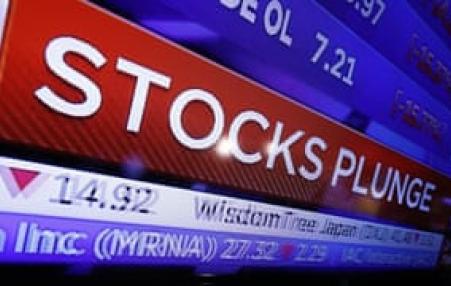
In what is being called the worst financial crisis since 1929, the US stock market has lost a third of its value in the space of a month, wiping out all of its gains of the last three years. When the Federal Reserve tried to ride to the rescue, it only succeeded in making matters worse. The government then pulled out all the stops. To our staunchly capitalist leaders, socialism is suddenly looking good.  
The financial crisis began in late February, when the World Health Organization announced that it was time to prepare for a global pandemic. The Russia-Saudi oil price war added fuel to the flames, causing all three Wall Street indices to fall more than 7 percent on March 9. It was called Black Monday, the worst drop since the Great Recession in 2008; but it would get worse. 
On March 12, the Fed announced new capital injections totaling an unprecedented $1.5 trillion in the repo market, where banks now borrow to stay afloat. The market responded by driving stocks 8% lower.
On Sunday, March 15, the Fed emptied its bazooka by lowering the fed funds rate nearly to zero and announcing that it would be purchasing $700 billion in assets, including federal securities of all maturities, restarting its quantitative easing program. It also eliminated bank reserve requirements and slashed Interest on Excess Reserves (the interest it pays to banks for parking their cash at the Fed) to 0.10%. The result was to cause the stock market to open on Monday nearly 10% lower. Rather than projecting confidence, the Fed’s measures were generating panic.
As financial analyst George Gammon observes, the Fed’s massive $1.5 trillion in expanded repo operations had few takers. Why? He says the shortage in the repo market was not in “liquidity” (money available to lend) but in “pristine collateral” (the securities that must be put up for the loans). Pristine collateral consists mainly of short-term Treasury bills. The Fed can inject as much liquidity as it likes, but it cannot create T-bills, something only the Treasury can do. That means the government (which is already $23 trillion in debt) must add yet more debt to its balance sheet in order to rescue the repo market that now funds the banks.
The Fed’s tools alone are obviously incapable of stemming the bloodletting from the forced shutdown of businesses across the country. Fed chair Jerome Powell admitted as much at his March 15 press conference, stating, “[W]e don’t have the tools to reach individuals and particularly small businesses and other businesses and people who may be out of work …. We do think fiscal response is critical.” “Fiscal policy” means the administration and Congress must step up to the plate.

Saturday, March 14, 2020

Government Must Act to Stop Spread of Economic and Financial Consequences of Coronavirus


How Covid  -19 slows the economy

Damon A. Silvers
March 10, 2020
AFL-CIO Blog
Coronavirus is not only a public health crisis, it is also a shock to the global economy. Working people must demand that government act, or we and our families will pay the price for others’ lack of action, as we so often have in the past.

, 

The stock market fell 7% at the open Monday morning. That may not sound like a lot, but it’s a catastrophic collapse—a financial crisis type number. Typically, the market might gain or lose in a whole year the value that was lost by the time the sound of the opening bell faded.
The collapse appears to be the result of a combination of the spread of coronavirus and falling oil prices—two events that are themselves connected. But it needs to be interpreted as an alarm bell, because we are dealing with the threat of two deadly kinds of contagions—one biological and the other economic and financial—both of which pose serious but manageable threats to the well-being of working people.
We have heard a lot about biological contagion and how to stop the spread of coronavirus in our workplaces and our communities. You can get up-to-date information on workplace safety and coronavirus at www.aflcio.org/covid-19 and at the websites of our affiliated unions. But what about financial and economic contagion? This is something elected leaders, economic policymakers and financial regulators must take action to stop.
How does it work? Coronavirus is a shock to the global economy. It stops economic activity of all kinds—shutting down factories, canceling meetings, sending cruise ships into quarantine. The only way to prevent that is to stop the spread of the virus (see above). The consequence of economic activity slowing down or stopping is that businesses lose revenue, and generally with loss of revenue comes loss of profits.
People who trade on the stock market usually price stocks by making projections about the future profits of the companies whose stocks trade on the public markets. The stock market reacts instantaneously to changing expectations about what may happen in the economy and to specific businesses. The stock market itself doesn’t create or destroy jobs, but it does contribute to the overall financial health of companies and of people. When stock prices fall rapidly, they can create their own kind of contagion—exposing fragile financing structures for both companies and people. That can in turn lead to retreat—companies pulling back on investments or, in the worst case, going bankrupt.
So the stock market can create contagion all by itself. But the much more serious kind of contagion has to do with corporate debt. We have had low interest rates for years, and businesses around the world have gone on a borrowing spree. This spree has been one of the causes of relatively healthy economic growth in the last few years, but it has also led to businesses carrying a lot of debt relative to their earnings and growth. 
Here is where the danger gets very real, because, as we all know, if you borrow money, you have to make payments on that debt. What if businesses that have borrowed a lot of money suddenly don’t have anywhere near the revenue they expected to have? This is what empty planes and blocked supply chains mean.  

Friday, February 28, 2020

Mr. Trump Meets the Covid Virus


So, here’s the response of the Trump team and its allies to the coronavirus, at least so far: It’s actually good for America. Also, it’s a hoax perpetrated by the news media and the Democrats. Besides, it’s no big deal, and people should buy stocks. Anyway, we’ll get it all under control under the leadership of a man who doesn’t believe in science.
From the day Donald Trump was elected, some of us worried how his administration would deal with a crisis not of its own making. Remarkably, we’ve gone three years without finding out: Until now, every serious problem facing the Trump administration, from trade wars to confrontation with Iran, has been self-created. But the coronavirus is looking as if it might be the test we’ve been fearing.
And the results aren’t looking good.
The story of the Trump pandemic response actually began several years ago. Almost as soon as he took office, Trump began cutting funding for the Centers for Disease Control and Prevention, leading in turn to an 80 percent cut in the resources the agency devotes to global disease outbreaks. Trump also shut down the entire global-health-security unit of the National Security Council.
Experts warned that these moves were exposing America to severe risks. “We’ll leave the field open to microbes,” declared Tom Frieden, a much-admired former head of the C.D.C., more than two years ago. But the Trump administration has a preconceived notion about where national security threats come from — basically, scary brown people — and is hostile to science in general. So we entered the current crisis in an already weakened condition.
And the microbes came.
The first reaction of the Trumpers was to see the coronavirus as a Chinese problem — and to see whatever is bad for China as being good for us. Wilbur Ross, the commerce secretary, cheered it on as a development that would “accelerate the return of jobs to North America.”
The story changed once it became clear that the virus was spreading well beyond China. At that point it became a hoax perpetrated by the news media. Rush Limbaugh weighed in: “It looks like the coronavirus is being weaponized as yet another element to bring down Donald Trump. Now, I want to tell you the truth about the coronavirus. … The coronavirus is the common cold, folks.”
Limbaugh was, you may not be surprised to hear, projecting. Back in 2014 right-wing politicians and media did indeed try to politically weaponize a disease outbreak, the Ebola virus, with Trump himself responsible for more than 100 tweets denouncing the Obama administration’s response (which was actually competent and effective).
And in case you’re wondering, no, the coronavirus isn’t like the common cold. In fact, early indications are that the virus may be as lethal as the 1918 Spanish Flu, which killed as many as 50 million people.
Financial markets evidently don’t agree that the virus is a hoax; by Thursday afternoon the Dow was off more than 3,000 points since last week. Falling markets appear to worry the administration more than the prospect of, you know, people dying. So Larry Kudlow, the administration’s top economist, made a point of declaring that the virus was “contained” — contradicting the C.D.C. — and suggested that Americans buy stocks. The market continued to drop.