Where Trump and Harris stand on the economic issues.
The New York Times. Maggie Astor
Oct 6, 2024.
Where Trump and Harris stand on the economic issues.
The New York Times. Maggie Astor
Oct 6, 2024.
November 16, 2022 | By Mauricio Torres Jr.
A few weeks ago news broke that California is set to become the world’s 4th largest economy — larger than Germany and the United Kingdom if the state were an independent nation. State leaders celebrated the news as evidence of their success.
Yet, despite California becoming the world’s 4th largest economy, we know too many Californians are struggling to make ends meet. A real marker of success is ensuring that every resident has a roof over their head, access to food and clean drinking water, the opportunity to get a higher education, and a robust safety net to fall on when things get tough. But right now that is not a reality.

California is set to become the world’s 4th largest economy — larger than Germany and the United Kingdom if the state were an independent nation. This strong economy should ensure that every resident has a roof over their head, access to food and clean drinking water, the opportunity to get a higher education, and a robust safety net to fall on when things get tough.
Yet, despite California becoming the world’s 4th largest economy, too many Californians are left out of our state’s economic success. As leaders celebrate California’s strong economy, we have to remember those that are continuously shut out from accessing our state’s wealth, and we must take collective action to create an inclusive economy.
This fall about 2 in 3 California households with incomes under $35,000 had trouble affording basic needs like housing, groceries, and diapers. For Black, Latinx, and other Californians of color, the challenge is often greater. This is a result of historical and continued policies that create and exacerbate racism and discrimination across our state, creating disparities in earnings, well-being, and wealth building.
As inflation and high housing costs continue to take a toll on Californians, state leaders must ensure that our public policies create an economy that benefits every Californian, not just corporations and those at the top.
One way California can help distribute our state’s great wealth is by strengthening existing tax credits like the California Earned Income Tax Credit, commonly known as the CalEITC, which puts cash into the pockets of California workers, their families, and young working adults with low incomes.
From The New York Review of Books
By Paul Krugman |
These are scary times in America, with one of our major parties careening into authoritarianism and the other having difficulty moving forward thanks to two uncooperative senators. Most of what I write, inevitably, focuses on the troubled prospects for our republic. But everyone needs a break. So today I want to talk about a happier topic: The risks of an economic crisis in China. |
OK, not exactly happier. But a change in subject, anyway. |
Warnings about the Chinese economy aren’t new — but until now the worriers, myself included, have been consistently wrong. Back in 2013 I suggested that China’s growth model was becoming unsustainable, and that its economy might be about to hit a Great Wall; obviously that didn’t happen. |
Yet the more closely you look at how China has been able to keep its economy going, the more problematic it looks. Basically, China has masked underlying imbalances by creating an immense housing bubble. And it’s hard to see how this ends well. |
The background: The reforms introduced by Deng Xiaoping at the end of the 1970s created an economic miracle. China, which was desperately poor, is now a middle-income nation, and given its size, that makes it an economic superpower. But China’s economic growth has been gradually slowing. Here’s a five-year moving average of the country’s growth rate: |
|
There’s nothing mysterious about this slowdown. China was able to achieve incredibly rapid growth through a combination of technological borrowing from more advanced nations and a huge transfer of population from rural areas to cities. As its technological sophistication grew and the reservoir of rural labor shrank, growth was bound to slow. In addition, the one-child policy gave China the kind of demography we usually associate with richer countries: The working-age population peaked a few years ago and is now shrinking: |
|
In and of themselves, slower growth and a demographic transition needn’t imply a crisis. But here’s the problem: Chinese spending patterns haven’t adjusted to the needs of a slower-growth economy. In particular, the country still has a very high savings rate, so to maintain full employment it needs to invest an incredibly high share of G.D.P. — more than 40 percent. |
What drives investment? Normally, it depends a lot on how fast the economy is growing: growth is what creates a demand for new factories, office buildings, shopping malls and so on. So very high investment as a share of G.D.P. is sustainable if the economy is growing at 9 or 10 percent a year. If growth drops to 3 or 4 percent, however, the returns on investment drop. That’s why China really needs to change its economic mix — to save less and consume more. |
But Chinese savings have stayed stubbornly high — and yes, excessive saving is an economic problem. |
A few years ago a study from the International Monetary Fund tried to explain high Chinese savings. It suggested that the biggest culprit was the same demographic transition that is one cause of slowing growth: A declining birthrate means that Chinese adults can’t expect their children to support them later in life, so they save a lot to prepare for retirement. This demographic factor is reinforced by the weakness of China’s social safety net: People can’t count on the government to support them in their later years or to pay for health care, so they feel the need to accumulate assets as a precaution. |
Chinese policymakers know all this, but somehow haven’t been able to deal with these underlying issues. Instead, they’ve kept the rate of investment very high despite slowing growth — mainly by encouraging huge spending on housing construction. A 2020 paper by Kenneth Rogoff and Yuanchen Yang shows that Chinese investment in real estate now greatly exceeds U.S. levels at the height of the 2000s housing bubble, both in dollar terms and as a share of G.D.P.: |
|
Rogoff and Yang also show both that housing prices in China are extremely high relative to incomes and that the real estate sector has become an incredibly large share of China’s economy. |
None of this looks sustainable, which is why many observers worry that the debt problems of the giant property developer Evergrande are just the leading edge of a broader economic crisis. |
I’ve already pointed out that until now China has been able to defy the doomsayers. So you might be tempted to give Chinese policymakers the benefit of the doubt, and assume that they’ll manage to deal with this situation. It turns out, however, that they haven’t really been dealing with their economy’s underlying problems, they’ve been masking those problems by creating a housing bubble that will ultimately magnify the problem. |
But why should the rest of the world care? China, which maintains controls on the flow of capital into and out of the country, isn’t deeply integrated with world financial markets. So the fall of Evergrande isn’t likely to provoke a global financial crisis in the same way that the fall of Lehman Brothers did in 2008. A Chinese slowdown would have some economic spillover via reduced Chinese demand, especially for raw materials. But in purely economic terms, the global economic risks from China’s problems don’t look all that large. |
China does, however, have an autocratic government — the kind of government that in other times and places has tended to respond to internal problems by looking for an external enemy. And China is also a superpower. It’s not hard to tell scary stories about where all this might lead. |
And with that, I return you to your regular worries about what’s going on in the United States. |
https://www.nytimes.com/2021/04/28/business/california-budget-stock-market.html?
Readings on the Economy and the Pandemic
Max Sawicky.
https://www.cepr.net/wp-content/uploads/2021/01/2021-01-Federal-Budget-Sawicky-1.pdf
https://cepr.net/wp-content/uploads/2021/03/2021-03-Federal-Budget-III-Sawicky.pdf
Nursing homes, private Equity and Covid
How Covid -19 slows the economy
Coronavirus is not only a public health crisis, it is also a shock to the global economy. Working people must demand that government act, or we and our families will pay the price for others’ lack of action, as we so often have in the past.
|
,
|
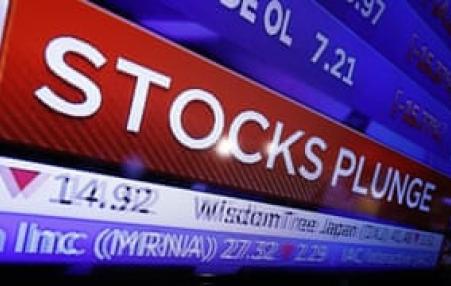
The stock market fell 7% at the open Monday morning. That may not sound like a lot, but it’s a catastrophic collapse—a financial crisis type number. Typically, the market might gain or lose in a whole year the value that was lost by the time the sound of the opening bell faded.
The collapse appears to be the result of a combination of the spread of coronavirus and falling oil prices—two events that are themselves connected. But it needs to be interpreted as an alarm bell, because we are dealing with the threat of two deadly kinds of contagions—one biological and the other economic and financial—both of which pose serious but manageable threats to the well-being of working people.
We have heard a lot about biological contagion and how to stop the spread of coronavirus in our workplaces and our communities. You can get up-to-date information on workplace safety and coronavirus at www.aflcio.org/covid-19 and at the websites of our affiliated unions. But what about financial and economic contagion? This is something elected leaders, economic policymakers and financial regulators must take action to stop.
How does it work? Coronavirus is a shock to the global economy. It stops economic activity of all kinds—shutting down factories, canceling meetings, sending cruise ships into quarantine. The only way to prevent that is to stop the spread of the virus (see above). The consequence of economic activity slowing down or stopping is that businesses lose revenue, and generally with loss of revenue comes loss of profits.
People who trade on the stock market usually price stocks by making projections about the future profits of the companies whose stocks trade on the public markets. The stock market reacts instantaneously to changing expectations about what may happen in the economy and to specific businesses. The stock market itself doesn’t create or destroy jobs, but it does contribute to the overall financial health of companies and of people. When stock prices fall rapidly, they can create their own kind of contagion—exposing fragile financing structures for both companies and people. That can in turn lead to retreat—companies pulling back on investments or, in the worst case, going bankrupt.
So the stock market can create contagion all by itself. But the much more serious kind of contagion has to do with corporate debt. We have had low interest rates for years, and businesses around the world have gone on a borrowing spree. This spree has been one of the causes of relatively healthy economic growth in the last few years, but it has also led to businesses carrying a lot of debt relative to their earnings and growth.
Here is where the danger gets very real, because, as we all know, if you borrow money, you have to make payments on that debt. What if businesses that have borrowed a lot of money suddenly don’t have anywhere near the revenue they expected to have? This is what empty planes and blocked supply chains mean.
|
| Rev. William Barber Yes, the Dow is at a record high and unemployment rates are lower than they have been in decades – but 140 million people are also poor or low wealth |
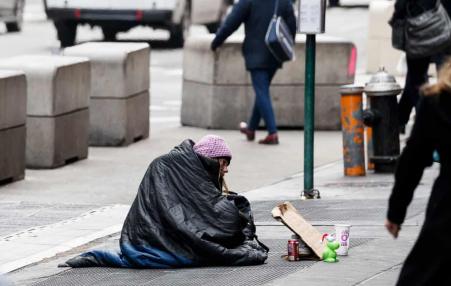
‘Sixty per cent of African Americans are poor or low income, as are 64% of Hispanics, but the largest single racial group among America’s poor and low income – 66 million Americans – are white.’ , Justin Lane/EPA
|
Rather than offer a report on the State of the Union, Donald Trump used his annual primetime slot in the House of Representatives to host a re-election rally. The House speaker, Nancy Pelosi, summed up the sentiment of the House majority when she stood behind Trump and ripped the text of his speech in half. “I tore up a manifesto of mistruths,” she later said. But of all the lies he told, the president is proudest of the economy he claims is booming. Poor and low-income Americans know that the economy is, in fact, his greatest vulnerability.
Yes, the Dow is at a record high and official unemployment rates are lower than they have been in decades. But measuring the health of the economy by these stats is like measuring the 19th-century’s plantation economy by the price of cotton. However much the slaveholders profited, enslaved people and the poor white farmers whose wages were stifled by free labor did not see the benefits of the boom.
In America today, 140 million people are poor or low wealth. While three individuals own as much wealth as all of them put together, the real cost of living has soared as wages have stagnated. Since the 1970s, the number of people who are paying more than a third of their monthly income in rent has doubled, and there is not a single county in the nation where a person working full-time at minimum wage can afford to rent a two-bedroom apartment. Sixty per cent of African Americans are poor or low-income, as are 64% of Hispanics, but the largest single racial group among America’s poor and low-income – 66 million Americans – are white.
Every day in America roughly 700 people die from poverty
While Trump stirs racial fears by attacking “sanctuary cities” and black political leaders, there are more white Americans who are unable to meet their basic needs than at any time in this nation’s history. Every day in America roughly 700 people die from poverty. When seven young people died from vaping, Trump called it a national emergency. But for the past four decades, Republicans have racialized poverty while Democrats have run from it, adopting euphemisms like “those who aspire to the middle class” to talk about poor people. By accepting the lie that everyone does better when the economy does better, both parties paved the way for the extremism of a plutocratic presidency.
We know that elites whose stock portfolios and personal taxes have benefited from the Trump tax cuts are going to stand by this president. But those people are an extreme minority – a literal plutocracy – in this nation. The question in 2020 is not whether Trump’s most ardent supporters will stand by him, but whether Democrats will embrace an agenda that can inspire poor and marginalized people to engage in a political system that has simply overlooked them for decades.
|


