Sunday, January 13, 2019

Free Trade” Is Today’s Imperialism by the 1 Percent

PUBLISHED
January 13, 2019
Opposition to “free” trade is clearly growing — both the progressive and the corporate elements of the Democratic Party are now critical of agreements like the North American Free Trade Agreement and the Trans-Pacific Partnership. Less clear are the alternatives to free trade that might emerge. As progressives continue to build power inside and outside of the Democratic Party, we must clarify our understanding of the international political economy, and imagine and begin to build real alternatives to free trade. Building these alternatives must become an essential component of a more progressive US foreign policy. 
The conventional wisdom says that if you oppose free trade, you must support protectionism or economic nationalism. This is misleading. There is no such thing as “free” trade. People create all of the systems that govern our political economy. These systems inevitably favor certain human activities over others, and we can design them to act any way that we want. The important question is: For whom are trade policies “free”? Put another way: Who do trade policies favor?
Debunking “Free” Trade
“Free” trade is free only for capital owners: the plutocratic fewwho own and control multinational corporations. When countries enter into free trade agreements, the governments of both countries effectively agree that their laws will not favor businesses from their country over businesses from any other countries. The main way that free trade does this is by attempting to reduce all tariffs to as close to 0 percent as possible, to eliminate import quotas that countries can use to limit the amount and types of goods imported from specified countries, and to discourage countries from more directly subsidizing their own businesses. 
Read the entire piece:  https://truthout.org/articles/free-trade-is-todays-imperialism-by-the-1-percent/

Friday, January 11, 2019

Thursday, January 10, 2019

Pentagon Accounting Fraud

Pentagon Accounting Fraud
On november 15, ernst & young and the other private firms hired to audit the pentagon announced that they couldn’t complete the job. Congress had ordered an independent audit of the Department of Defense, the government’s largest discretionary-cost center—which receives 54 cents out of every dollar in federal appropriations—because the Pentagon had failed for decades to audit itself. The firms concluded, however, that the DOD’s financial records were so
riddled with bookkeeping deficiencies, irregularities, and errors that a reliable audit was simply impossible.
Deputy Secretary of Defense Patrick Shanahan tried to put the best face on things, telling reporters, “We
failed the audit, but we never expected to pass it.” Shanahan suggested that the department should get credit for
the effort, saying, “It was an audit on a $2.7 trillion organization, so the fact that we did the audit is substantial.”
The truth, however, is that the DOD was dragged kicking and screaming to this audit by bipartisan frustration in
Congress—and had this been a major corporation, the result likely would have been a crashed stock.

Monday, January 7, 2019

Wall Street, Banks, and Angry Citizens: The Inequality Gap on a Planet Growing More Extreme


Nomi Prins
December 13, 2018
TomDispatch


In today's global economy, financial security is increasingly the property of the 1%.


,


As we head into 2019, leaving the chaos of this year behind, a major question remains unanswered when it comes to the state of Main Street, not just here but across the planet. If the global economy really is booming, as many politicians claim, why are leaders and their parties around the world continuing to get booted out of office in such a sweeping fashion?

One obvious answer: the post-Great Recession economic “recovery” was largely reserved for the few who could participate in the rising financial markets of those years, not the majority who continued to work longer hours, sometimes at multiple jobs, to stay afloat. In other words, the good times have left out so many people, like those struggling to keep even a few hundred dollars in their bank accounts to cover an emergency or the 80% of American workers who live paycheck to paycheck.

In today's global economy, financial security is increasingly the property of the 1%. No surprise, then, that, as a sense of economic instability continued to grow over the past decade, angst turned to anger, a transition that -- from the U.S. to the Philippines, Hungary to Brazil, Poland to Mexico -- has provoked a plethora of voter upheavals. In the process, a 1930s-style brew of rising nationalism and blaming the “other” -- whether that other was an immigrant, a religious group, a country, or the rest of the world -- emerged.

This phenomenon offered a series of Trumpian figures, including of course The Donald himself, an opening to ride a wave of “populism” to the heights of the political system. That the backgrounds and records of none of them -- whether you’re talking about Donald Trump, Viktor Orbán, Rodrigo Duterte, or Jair Bolsonaro (among others) -- reflected the daily concerns of the “common people,” as the classic definition of populism might have it, hardly mattered. Even a billionaire could, it turned out, exploit economic insecurity effectively and use it to rise to ultimate power.

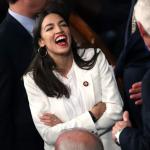
Alexandria Ocasio-Cortez Is Floating a 70 Percent Top Tax Rate — Here’s the Research That Backs Her Up


https://portside.org/2019-01-06/alexandria-ocasio-cortez-floating-70-percent-top-tax-rate-heres-research-backs-her
Portside Date: 
Author: Matthew Yglesias
Date of source: 
Vox

In an interview scheduled to air Sunday on 60 Minutes, America’s most widely covered new House member Alexandria Ocasio-Cortez (D-NY) floats the idea of a top marginal income tax rate as high as 70 percent as part of a plan to finance a “Green New Deal” that would aim to drastically curb America’s carbon dioxide emissions.
This is not a formal policy proposal. Indeed, the whole idea of offsetting the budgetary cost of decarbonization with taxes is somewhat at odds with the main currents of thought in the Green New Deal universe, which lean more toward the idea that deficits don’t matter and the costs shouldn’t be paid for at all.
Seventy percent is a lot higher than the current rate and will doubtless fuel the conservative effort to paint AOC as a know-nothing, but the number is in line with one prominent strain of recent economics research and is at least moderately well supported by America’s historical experience.

Top tax rates used to be much higher

Historically, the United States used to have many more tax brackets, and the top marginal tax rates were extremely high. Under Eisenhower, the top earners paid a 91 percent marginal rate, falling to Ocasio-Cortez’s proposed 70 percent under Kennedy and Johnson, before falling to 50 percent after Ronald Reagan’s first big tax cut, and then down to 38 percent after the 1986 tax reform.
One big part of that story is that before 1986 the tax base was considerably narrower. Rich people used to have a lot more loopholes and deductions of which they could avail themselves. The 1986 law closed a lot of those loopholes, but also cut the top rate.
But another part of the story is that there used to be more tax brackets. Right now a single person earning $550,000 a year pays the same marginal rate as a person earning 10 or 50 times as much. Under the old tax code, the top rate was reserved its top rate for the super-duper rich.
Ocasio-Cortez seems to have something like this in mind when she tells Cooper, “Once you get to the tippy-tops, on your $10 millionth dollar, sometimes you see tax rates as high as 60 percent or 70 percent. That doesn’t mean all $10 million dollars are taxed at an extremely high rate. But it means that as you climb up this ladder, you should be contributing more.”
In other words, she’s not saying that everyone who pays the current top rate should see their taxes raised to 60 or 70 percent. Rather, a small number of ultra-rich people should pay at that rate. This is obviously a controversial proposition that will strike some as unfair and others as counterproductive to the economy. But it’s pretty much in line with the cutting-edge work of progressive-minded tax economists.

The empirical and theoretical case for higher taxes

MIT’s Peter Diamond and Berkeley’s Emmanuel Saez relaunched this debate with a landmark 2012 paper that argued for a 73 percent top income tax rate in the United States.
This conclusion relies on two subsidiary points. One is the notion that for the very rich, the subjective value of an extra dollar is essentially $0. In other words, while a poor person’s life may get a lot better if he gets a little bit of extra money, someone like Mark Zuckerberg isn’t going to care at all.
It follows that regardless of how much money we think the government should spend, we should be squeezing the richest people as much as possible to keep taxes lower on the less wealthy who will miss the money more. They then do empirical calculations that lead them to estimate that a rate of 73 percent or so would maximize revenue — higher than that and taxation becomes counterproductive because people work less.
In a separate paper that Saez wrote with Thomas Piketty and Stefanie Stantcheva, the authors argue for an even higher rate on somewhat different grounds.
Their argument is that, empirically, CEO pay and pretax inequality is higher in countries with lower top marginal tax rates. In lower tax countries, they believe, CEOs work really hard to maximize their own pay whereas in higher tax countries they accept lesser compensation, which leaves more money left over for other people.
An even more aggressive 2016 paper from Benjamin Lockwood, Charles Nathanson, and Glen Weyl argues that confiscatory taxation would be good for the economy because it would discourage talented people from entering lucrative lines of work. In a world of low taxes, they show, talented people have strong incentives to work in legal or financial professions rather than be teachers or research scientists. But the social reward to having really good traders or corporate lawyers is either low or negative, whereas the social reward to having excellent teachers and scientists is high.
So while Ocasio-Cortez’s proposal is certainly extreme relative to the policy status quo — and unquestionably something many economists would denounce as economically ruinous — it’s actually moderate compared to what Saez, Piketty, and Stantcheva, or Lockwood, Nathanson, and Weyl call for since she’s sticking with the “mere” goal of raising revenue.

The Green New Deal is supposed to rely on deficit spending

A separate question from all of this tax policy is whether a super high tax rate could raise enough money to finance a Green New Deal. That, in turn, depends in part on what exactly you think such a deal should entail.